Nitrate Contamination and Home Prices in California
While I was in graduate school, I had the opportunity to work on a project exploring how consumers reacted to news that their tap water was unsafe to drink. Using data from across the United States, we found that bottled water sales increased in counties where local water systems issued public notifications about drinking water contamination.
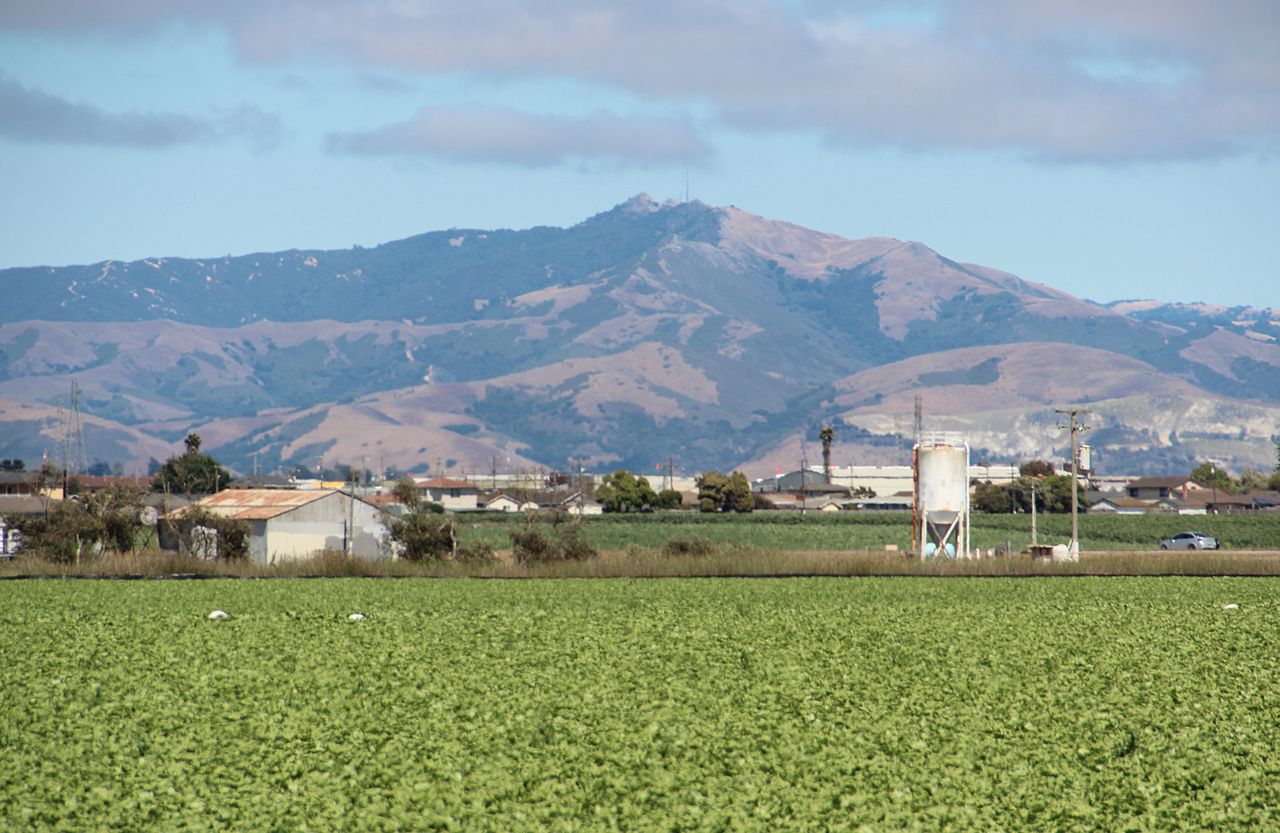
_viewed_from_CA_SR_1.jpg)
Buying bottled water allows consumers to avoid drinking contaminated water and makes perfect sense as an immediate, short-term response to contamination. After finishing this project, however, I was interested in the longer-run impacts of water contamination. In a solo project that was recently accepted for publication (available here as a working paper), I explore what happens to home prices when California residents learn their drinking water contains unsafe levels of nitrates.
What is this paper about?
In 2012, California recognized access to safe drinking water as a human right. Despite this, many communities still struggle to deliver safe, clean drinking water. This is especially true in the Central Valley, where nitrate contamination from agricultural fertilizers and animal waste remains a serious problem. When water systems detect unsafe nitrate levels, they’re required to notify residents within 24 hours. These notifications are called “Tier 1” notifications because they alert consumers to the presence of contaminants such as nitrates that pose immediate, serious health risks. In this project, I explore how these contamination events affect local home values.
What does this paper say?
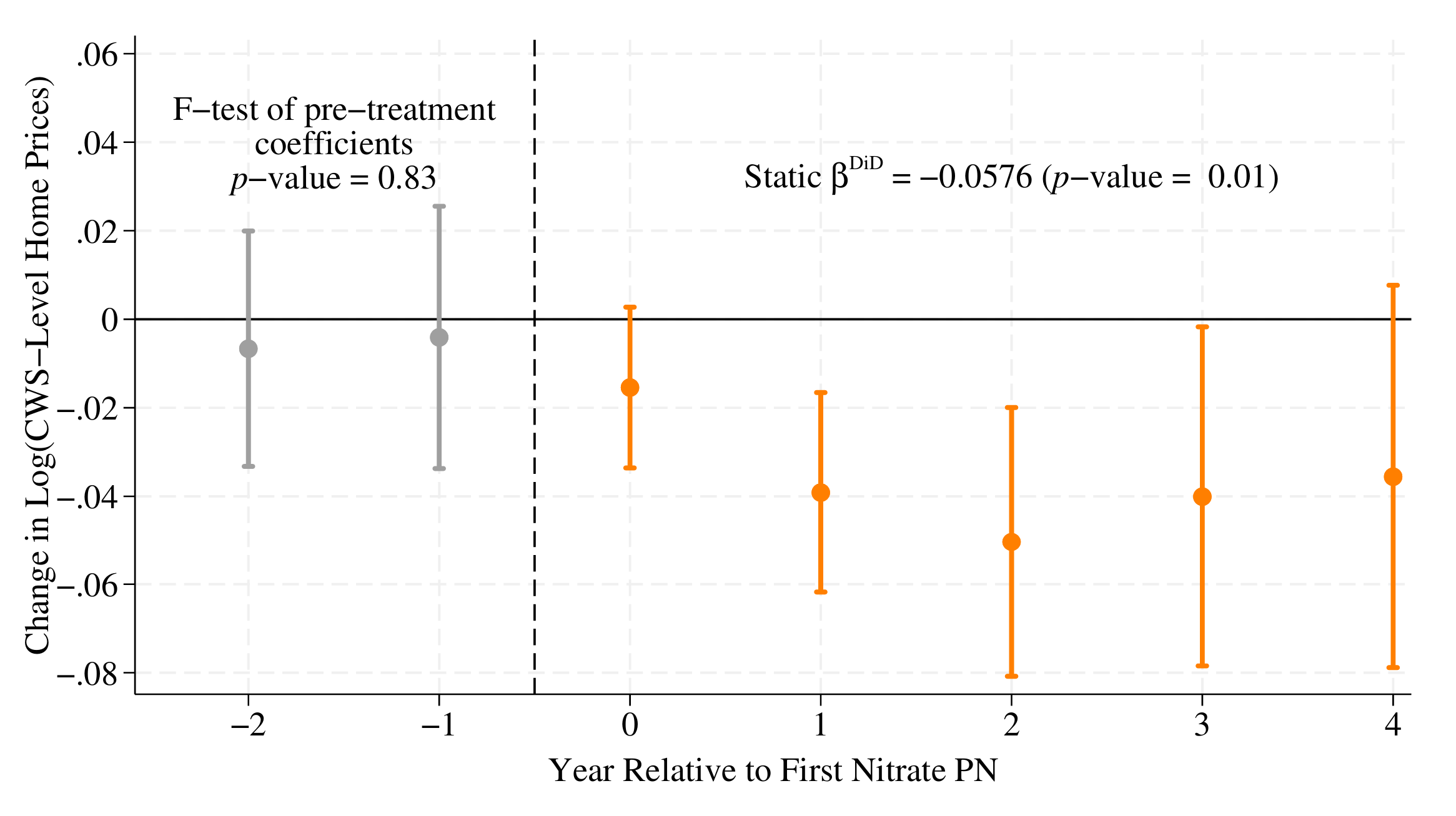
I start by collecting data on home prices from 2000 to 2024 across California. Using this data, I can estimate how average home prices change after a nitrate notification is issued. I find that nitrate contamination notifications lead to declines in home prices of 5.8% on average. These declines appear soon after the notification is issued and persist for several years.
To put these results in context, a typical home in my data was worth around $397,000. That 5.8% decline translates to a loss of approximately $23,000 in home value. I can scale this estimate up by considering the impact of a notification across an entire water system. In my data, an average-sized water system that issues a nitrate notification serves about 27,700 people spread across 9,200 homes. Taken together, this implies a total economic cost of roughly $212 million for a given water system.
What should I take away from this paper?
When residents learn their tap water isn’t safe to drink, they face a range of costs. In the short term, they have to secure clean drinking water, which might entail boiling tap water, buying bottled water, or installing water filters. In the long term, affected residents face reduced home values and pressure to move. While the health consequences of water contamination have received significant media coverage, the longer-term economic consequences are substantial as well.
Nitrate contamination is connected with agricultural activity, which is prevalent throughout the Central Valley. Balancing the trade-offs around farming, raising livestock, and ensuring safe drinking water requires fully accounting for the costs of contamination. Analyzing declines in home prices tells us about the value that residents place on services like clean drinking water. For the 1.4 million Californians served by water systems that have issued nitrate notifications, the economic costs of contamination imply that the returns to investing in water treatment would be high.